

Ordering the correct cardboard tube size to package your product can be surprisingly tricky. Many buyers are confused about the difference between internal and external diameters, how the tube length changes when end caps are fitted, and how much clearance to allow to ensure a snug fit. Choosing the wrong size tube can lead to damaged products, wasted materials, and costly shipping delays.
In this blog, we will explain exactly how cardboard tube sizes are measured and why internal diameter is the most important measurement for most packaging applications. You will learn the key differences between usable internal length and overall length, and discover simple ways to ensure your product fits perfectly. By following these practical tips, you can confidently select the right tube for your shipping, storage, or display needs.
How Are Cardboard Tube Sizes Measured
Cardboard tubes (or cardboard cores) are measured using three key dimensions: internal diameter, external diameter, and length. For most packaging applications, internal diameter and usable internal length are the most important measurements. Understanding these key measurements will ensure your products fit securely and won’t be damaged during shipping.
Internal Diameter (ID) and Why It Matters Most
Internal diameter is the distance across the inside of the tube from one wall to the opposite wall. This measurement determines which products can fit inside the tube. This is why it is the most important measurement for packaging. You should always confirm the internal diameter of a tube before ordering to ensure the product fits.
External Diameter (OD) and When It Is Relevant
External diameter measures the entire width of a tube, including the tube wall. This measurement is important for storage, pallet stacking, and for postal limits. External diameter does not determine what products can fit inside.
Tube Length: Overall vs Usable
Overall length is the physical length of the tube itself. Usable internal length is the space that’s available inside the tube once you have fitted end caps or plugs. The depth of the tube end cap reduces the usable length, and many buyers overlook this, leading to purchases of tubes that are slightly too short. You should always plan around usable length to ensure your product fits comfortably within the tube.
How to Measure the Correct Cardboard Tube Size for Your Product
Choosing the right cardboard tube for your products will start with a few simple steps to ensure your product fits perfectly and stays protected.
Step 1: Measure the Diameter of Your Product
Measure the widest part of the item you want to ship inside a tube. For rolled materials like posters or prints, you should measure them once they are rolled. A practical rule of thumb we recommend that you follow is to add an extra 5 to 10 millimetres to the product diameter. This will allow for a more snug fit while ensuring there is no scraping or crushing.
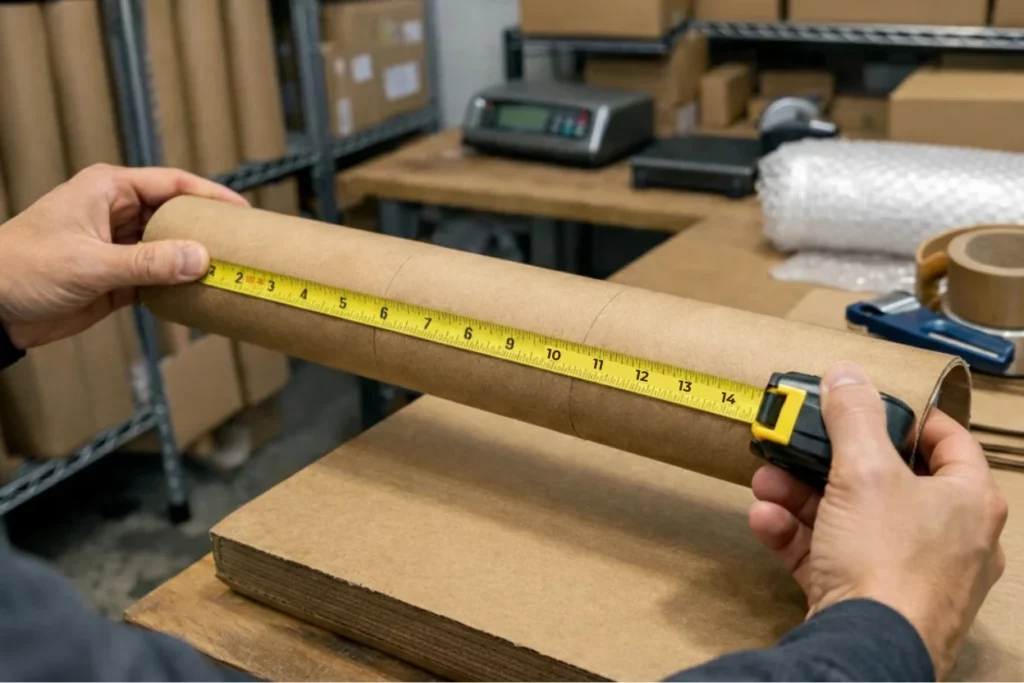
Step 2: Measure the Required Internal Length
Measure the entire length of the product you’re shipping and add a small clearance. You should always confirm the usable internal length of a tube once plugs or end caps have been fitted. Usable length is more important than overall length when it comes to shipping your products safely.
Step 3: Consider Wall Thickness and Strength
Make sure you choose a tube with walls thick enough to protect your product. Thicker walls are essential if you’re shipping fragile, high-value, or heavy products. If you’re unsure which wall thickness you will need, get in touch with our packaging experts, and they will work with you to help ensure your tubes have the right level of protection.
Common Mistakes When Ordering Cardboard Tubes
Choosing the right cardboard tube for your packaging needs will involve more than just measurements. Here are some of the common mistakes to avoid to ensure your products are protected during shipping:
- Overlooking product shape or material: Curved, delicate, or oddly shaped products may need extra padding or a slightly larger tube to help prevent damage.
- Ignoring shipping and handling conditions: Failing to account for postal requirements, stacking pressure, or long-distance shipping can result in crushed or damaged tubes.
- Ordering standard sizes without checking fit: Assuming an off-the-shelf cardboard tube will work for every product can lead to material waste or multiple orders.
- Not considering wall strength for storage or display: Even if a tube fits a product comfortably, thin walls may fail under stacking pressure or during use within a display.
- Failing to plan for multiple products in one tube: Trying to fit several items into one tube without calculating proper clearance can cause scratches or damage to the products.
By thinking beyond measurements alone, you can ensure you purchase reliable, professional packaging solutions for your products.
When Bespoke Tube Sizes Make Sense
Bespoke cardboard tubes are ideal when standard tube sizes cannot meet your specific packaging requirements. They are especially useful in situations where products are high-value, shipped in large quantities, or require a professional presentation. Custom cardboard tubes will ensure a consistent usable internal length, which is essential for protecting delicate or precisely sized items.
Accurate cutting and precise internal sizing will all help to reduce the risk of product damage and ensure your packaging is fit for purpose. Custom tubes also simplify storage and handling, particularly when tubes must fit into specific containers or displays. Even a small difference in length or diameter can affect product safety and overall efficiency.
Considering bespoke options will allow you to plan your packaging solutions with confidence, maintain consistent shipping quality, and avoid common problems associated with off-the-shelf tubes.
Protect Your Products with the Right Cardboard Tubes
Choosing the right cardboard tube doesn’t have to be complicated. By understanding the key measurements and considering product protection, you can ensure your items fit securely and arrive in perfect condition. Whether standard sizes meet your needs or bespoke options are required, accurate sizing will improve packing efficiency and reduce the risk of damage.
High-quality tubes provide consistent performance and a professional presentation for any product, from rolled prints to delicate or high-value items. Custom options also simplify storage, shipping, and handling, giving you confidence that every shipment is safe and reliable.
If you are unsure which size or wall thickness is best for your products, contact our experts today, and we will help you find the right solution for your shipping and storage needs.