
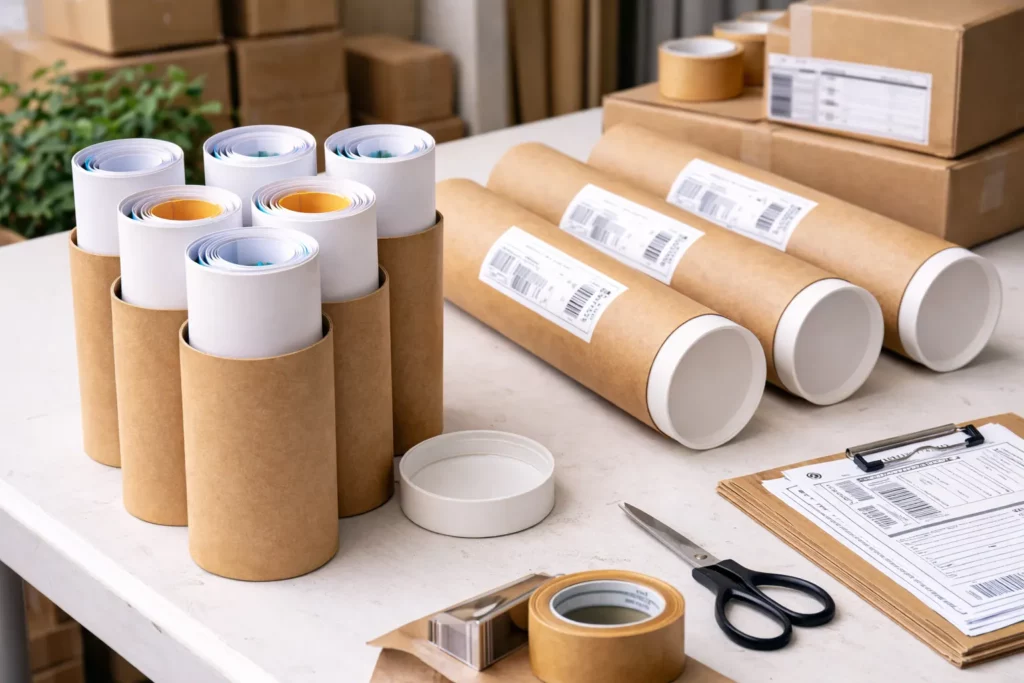
Shipping rolled paper is one of the most common causes of avoidable damage during transportation. Creases, flattened rolls, and crushed edges don’t usually result from poor handling; they’re caused by packaging that isn’t designed for rolled materials.
Cardboard mailing tubes are the most reliable way to ship rolled paper without any creases, because they’re built specifically to protect the shape of the item, not just the item itself.
In this blog, we will explore what actually causes rolled paper to crease during shipping and why mailing tubes are perfectly designed to ship rolled items such as posters, prints, and important documents.
Why Does Rolled Paper Crease During Shipping?
Rolled paper will crease during shipping because it comes under unexpected pressure. Parcels are stacked, moved, and handled multiple times during their transportation journey, and if your packaging can’t handle this pressure, the contents can be easily damaged.
Flat packaging is a common problem. When rolled paper is placed inside a box or mailer, the weight pressing down on the roll causes it to flatten slightly. Even small changes in shape can leave permanent crease lines on your paper.
Handling also plays a key role. Bending during lifting and sorting will put unnecessary stress on the paper roll, especially at its edges. If the paper can move inside the packaging, this damage can increase as the roll shifts during transit.
Put simply, rolled paper creases when pressure, bending, or movement reaches the paper instead of being controlled and protected by the packaging.
Why Flat Packaging Fails for Rolled Paper
Flat packaging may seem like a safe choice, but it will more than likely cause most of the problems when shipping rolled paper. Boxes and flat mailers are made for items with edges, not items that rely on their shape for strength.
- Boxes leave too much room
A rolled item needs support on all sides. Empty spaces can let weight press down and slowly flatten the roll itself.
- Flat mailers bend before the paper does
When stacked, the packaging is what bends first. This will apply unnecessary pressure to the paper roll itself. - Rectangular packaging encourages movement
As parcels are handled, the roll will shift, loosen, and press against hard edges. This will crease and potentially damage paper rolls.
How Cardboard Mailing Tubes Prevent Creases
1. Cylindrical shape distributes pressure evenly
A round tube has no flat sides or corners, meaning that there are no weak points. When weight is applied during shipping, stacking, or handling, the pressure is distributed around the tube rather than concentrated in a single area of the roll.
2. Rigid walls resist bending and compression
Mailing tubes are designed to maintain their shape as they move through various postal and courier systems. Their rigid structure is what helps to prevent bending and protects rolled paper from being flattened.
3. Snug fit reduces internal movement
A correctly sized cardboard tube will keep rolled paper secure and in place. With less room to move, the paper is less likely to loosen, rub, or press against edges during shipping.

What Types of Rolled Paper Benefit Most from
Mailing Tubes
Mailing tubes are most effective when it’s imperative that rolled paper keeps its shape and surface finish during the shipping process. They are commonly used for items where even light damage would be noticeable or costly.
- Posters and art prints: Protects inked surfaces and prevents any edge damage or flattening.
- Architectural drawings and blueprints: Keeps large-format plans clean, legible, and properly rolled on arrival.
- Maps and charts: Prevents creases that can distort detail or make paper harder to use.
- Wrapping paper sheets: Stops decorative paper from tearing or developing pressure lines.
- Large-format photography prints: Preserves image quality by avoiding surface marks or bending.
- Technical documents on heavy stock: Supports thicker paper that holds its shape but creases under pressure.
These are just some of the reasons why cardboard mailing tubes are trusted for rolled paper that needs to arrive looking exactly as it did when it was originally packaged.
Choosing the Right Cardboard Mailing Tube for Rolled Paper
Choosing the right cardboard mailing tube is all about matching the tube to how the paper behaves once it is rolled.
1. Tube diameter and roll tension
A tube should hold the roll comfortably without forcing it too tightly. Too small, and the paper is under tension. Too large, and the roll can loosen and shift during shipping.
2. Tube length and end protection
The tube should fully cover the paper with only a small allowance at each end. If the paper sits too close to the edge, it will be far more likely to be crushed by the tube end cap or scuffed during shipping.
3. Wall thickness and transit distance
For shorter, more local deliveries, standard mailing tubes will often be more than sufficient. For longer journeys or national shipping, thicker-walled tubes will provide extra resistance to increased pressure and stacking.
Choosing the correct size and length will help ensure your rolled paper stays protected from dispatch all the way through to delivery.
How to Pack Rolled Paper in
a Mailing Tube (Step-by-Step)
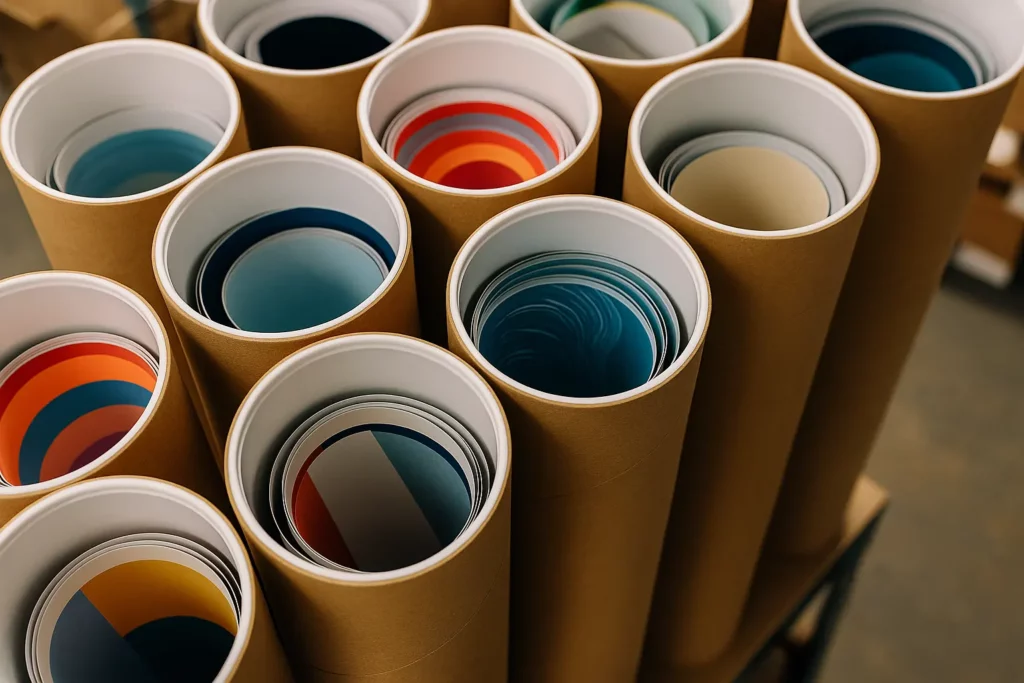
Packing rolled paper properly is just as important as choosing the correctly sized tube. A careful approach will help prevent any creasing or surface damage during shipping.
- Roll the paper with the print facing outward: This reduces tension on the printed surface and helps the roll hold its shape.
- Add a protective inner wrap: Use tissue or kraft paper to protect the paper against scuffs or light moisture.
- Choose a correctly sized cardboard mailing tube: The roll should fit snugly into the tube without needing to be forced.
- Secure the end caps firmly: Loose ends will allow for movement and expose the edges of the print to damage.
- Prevent internal movement: Use padding if needed to ensure the paper roll cannot shift within the tube.
- Label for handling if necessary: Clear labels like “fragile” or “handle with care” can help reduce rough handling during the shipping process.
To ship rolled paper without creases, roll it evenly, use a snug cardboard mailing tube, and secure both ends to prevent any movement.
Why Cardboard Mailing Tubes Are the Industry Standard for Rolled Paper
From print studios to architectural projects, cardboard mailing tubes are relied on because they do their job exceptionally well. They protect rolled paper in the conditions they actually travel through. Not ideal handling, but real handling.
They are not just a way to package rolled paper. They are a proven solution that reduces damage, preserves quality, and removes uncertainty when shipping important materials.
Got rolled paper that needs to arrive crease-free and in perfect condition?
Get in touch with Essex Tubes today to find the right cardboard mailing tube for your shipping needs.